



What is the Significance of Our Lady of Guadalupe?

Written by Rachel Kell, a Catholic wife, mother of four, and blogger at www.rachelkell.com
In 1474, a man named Cuauhtlatoatzin was born in the Aztec Empire of Mexico. Despite being raised in the pagan religion of the Chichimeca people, he would become known to the world as Saint Juan Diego, image-bearer of Our Lady of Guadalupe.
It took 1500 years for the gospel to reach the Americas, but with the Spanish Conquest of the Aztecs in 1521, Spanish friars came to share the gospel and bring conversion. Fray Pedro de Gante came to Texcoco in 1523 with a fervor for educating the indigenous children as well as evangelizing. It was here at the center of his missions, the Church of Santiago Tlateloco, that Cuauhtlatoatzin and his wife attended Mass and were among the first of the region baptized into the Catholic faith, taking on their Christian names of Juan Diego and María Lucía. Just four years later, in 1529, María Lucía grew ill and passed away. Juan Diego continued walking to Mass faithfully every Saturday and Sunday.
One such Saturday in 1531, on the 9th of December, Juan Diego heard someone calling his name as he walked toward the church. Running toward the voice up Tepeyac Hill, Juan Diego encountered a vision of the Virgin Mary. Her countenance in the apparition was radiant, and familiar to him as she was dressed in the cultural garb of the Aztecs. Speaking in his Nahualt native language, she told him:
"Know, know for sure, my dearest, littlest, and youngest son, that I am the perfect and ever Virgin Holy Mary, Mother of the God of truth through Whom everything lives, the Lord of all things near us, the Lord of heaven and earth. I want very much to have a little house built here for me, in which I will show Him, I will exalt Him and make Him manifest. I will give Him to the people in all my personal love, in my compassion, in my help, in my protection: because I am truly your merciful Mother, yours and all the people who live united in this land and of all the other people of different ancestries, my lovers, who love me, those who seek me, those who trust in me. Here I will hear their weeping, their complaints and heal all their sorrows, hardships and sufferings. And to bring about what my compassionate and merciful concern is trying to achieve, you must go to the residence of the Bishop of Mexico and tell him that I sent you here to show him how strongly I wish him to build me a temple here on the plain; you will report to him exactly all you have seen, admired and what you have heard. Know for sure I will appreciate it very much, be grateful and will reward you. And you? You will deserve very much the reward I will give you for your fatigue, the work and trouble that my mission will cause you. Now my dearest son, you have heard my breath, my word; go now and put forth your best effort."
Juan did as the Blessed Mother asked but was understandably met with some resistance from the Bishop. He was told to return at another time to have his request heard in full, a dismissal that felt very much like an insurmountable hurdle of disbelief on the part of the Bishop. Returning to the hilltop later that same day, he found the Lady where he had last seen her; still arrayed in shimmering garments and surrounded by illuminated foliage. Recounting the Bishop’s response, Juan Diego begged the Lady to find a more suitable and capable messenger for her mission. She replied:
“Listen to me, my youngest and dearest son, know for sure that I do not lack servants and messengers to whom I can give the task of carrying out my words, who will carry out my will. But it is very necessary that you plead my cause and, with your help and through your mediation, that my will be fulfilled. My youngest and dearest son, I urge and firmly order you to go to the bishop again tomorrow. Tell him in my name and make him fully understand my intention that he start work on the chapel I’m requesting. Tell him again that I am the ever Virgin, Holy Mary, the Mother of God, who is sending you.”
Once again, the saint did as she asked. This time, his request was not completely discarded, but neither was the Bishop willing to act on the instructions without some affirmation for himself. He sent Juan Diego away, telling him to return with proof of the request, likely never expecting to hear from him again.
When he returned once again to the hilltop to humbly ask the Lady for a sign, that he might be believed, she told him:
“That is fine, my youngest and dearest son; you will return here tomorrow so that you may take the sign he asked for. Then, he will believe and no longer doubt or be suspicious of you; and know, my dear son, I shall reward your care, work and fatigue in my behalf. Go now; tomorrow I shall be here waiting for you.”
But returned home, he found his uncle had become seriously ill, and so the next day he set about seeking medical help instead of immediately returning to Tepeyac Hill. Deliberately circumventing it, he proceeded on what seemed like a more dire and immediate errand. On the way, Our Lady intercepted his travel and asked:
“Listen, put it into your heart, my youngest and dearest son, that the thing that disturbs you, the thing that afflicts you, is nothing. Do not let your countenance, your heart be disturbed. Do not fear this sickness of your uncle or any other sickness, nor anything that is sharp or hurtful. Am I not here, I, who am your Mother? Are you not under my shadow and protection? Am I not the source of your joy? Are you not in the hollow of my mantle, in the crossing of my arms? Do you need anything more? Let nothing else worry you, disturb you. Do not let your uncle’s illness worry you, because he will not die now. You may be certain that he is already well.”
If Juan Diego himself had needed any more proof that Our Lady’s request was from heaven, this may have been set his heart more firmly on his mission. She continued:
“Go up, my dearest son, to the top of the hill, to where you saw me and received my directions and you will find different kinds of flowers. Cut them, gather them, put them all together, then come down here and bring them before me.”
When he had done as she asked, he returned to her.
“My youngest and dearest son, these different kinds of flowers are the proof, the sign that you will take to the Bishop. You will tell him from me that he is to see in them my desire, and therefore he is to carry out my wish, my will. And you, who are my messenger, in you I place my absolute trust. I strictly order you not to unfold your tilma or reveal its contents until you are in his presence. You will relate to him everything very carefully: How I sent you to the top of the hill to cut and gather flowers, all you saw and marveled at in order to convince the Governing Priest so that he will then do what lies within his responsibility so that my house of God which I requested will be made, will be built.”
Juan Diego returned to the Bishop. He wrapped his tilma, or cloak, tightly around himself as he had been asked. When he was finally granted an audience with the bishop, he opened the tilma and out poured the flowers - out of season, undiscoverable in the region, yet fragrant and vibrant. And on the tilma itself was imprinted an image of Our Lady of Guadalupe, just as Juan Diego had described to the bishop on previous visits.
This miraculous sign brought the Bishop to his knees, and within two weeks he had begun work on the “little house” for Our Lady, where she promised to “show Him … exalt Him and make Him manifest.” The chapel did indeed bring Christ to the people. And as the story of Our Lady of Guadalupe spread, an estimated 9 million people within 10 years converted to Christianity.
Five hundred years later, Juan Diego’s tilma can still be seen at the Basilica of Our Lady of Guadalupe. The cactus fiber from which the tilma was made should have disintegrated, but it remains intact. The astrological positioning of the stars on the cloak could not have been known by someone of Juan Diego’s education at the time, yet it is scientifically accurate. There are microscopic reflections of Juan Diego with Our Lady in her eyes, and the pigment used on the garment is unidentifiable and untraceable to the dyes that would have been available in the region and time of the apparition.
Juan Diego was walking to Mass when he came face-to-face with heaven. On December 12th, the anniversary of the Miracle of the Roses, we celebrate this feast day of Our Lady of Guadalupe. The prevalence of the image of Our Lady imprinted on his tilma is a testament to the strength and authenticity of the miracle. It is not something worshiped in and of itself - but rather a lingering reminder that God wants to include us in His work. He continues to choose Mary, Queen of Heaven, as a way to bring Christ to us just as she did on the first Christmas. He uses the most humble among us. He wants to use us even in the infancy of our faith. He wants our “yes” amidst our own personal losses and struggles. He will use our obedience in the little things to bring about miracles, to which we may never know the end. He comes to us where we are, in ways that we recognize, and in words that we can understand. And with each new breath, He gives us the freedom to choose Him back.
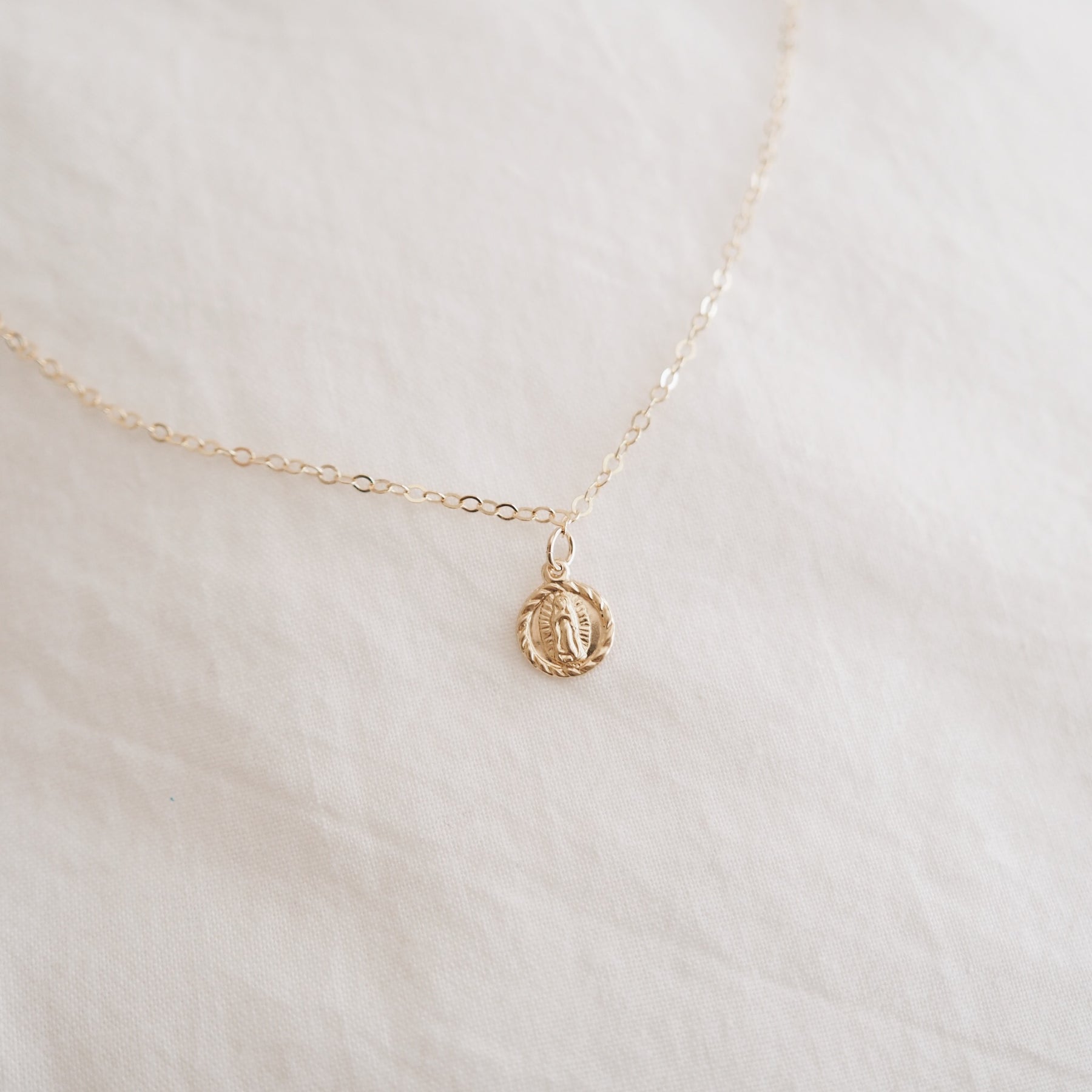
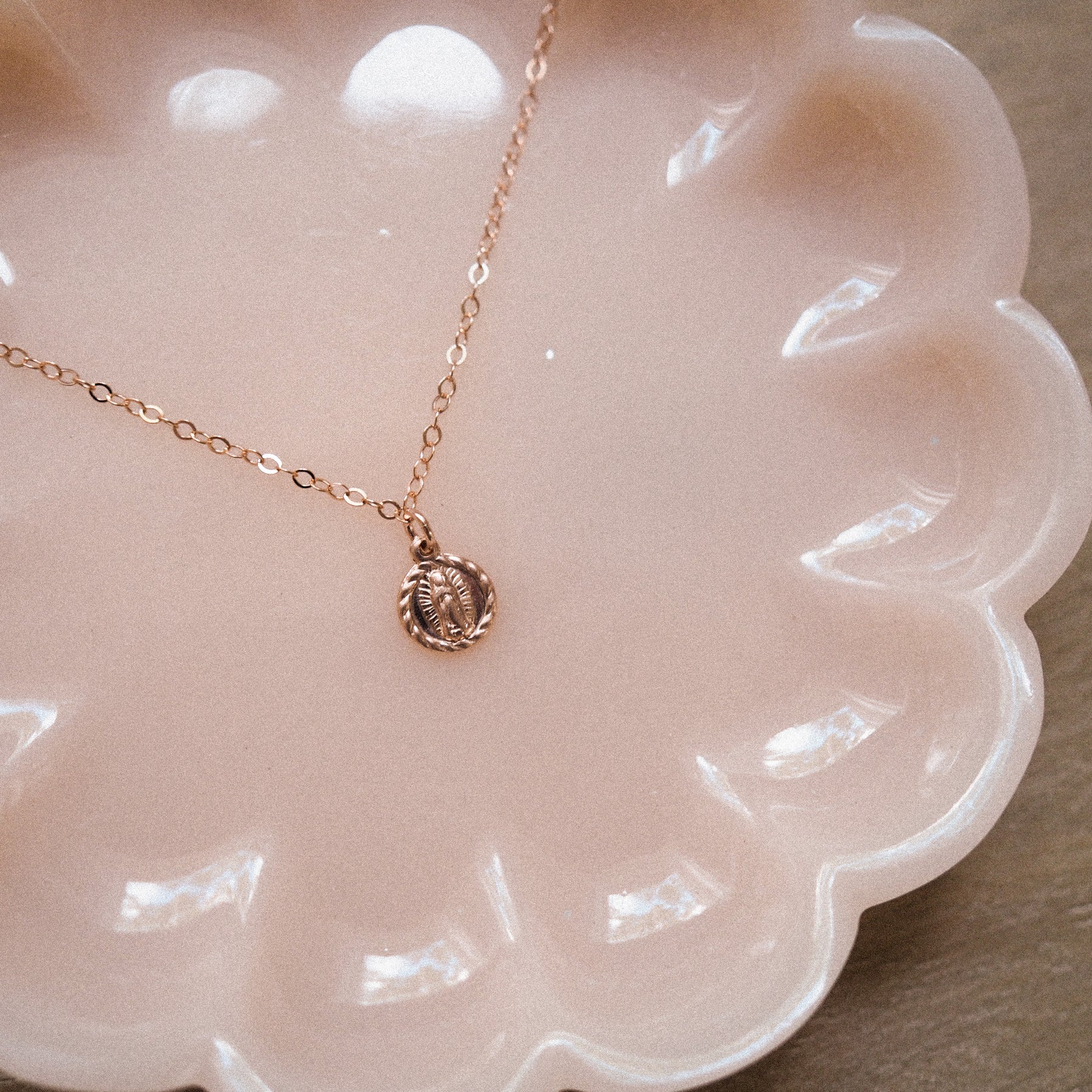
Our Lady of Guadalupe is featured in our Our Lady of Guadalupe Collection





Leave a comment